
Staff Spotlight: Anna Griswold on Cooking, Community, and the Joy of Bringing People Together
At the Santa Fe Farmers’ Market Institute, creating meaningful community experiences takes more than careful planning—it requires responsiveness, creativity, and a genuine love of people. In her role supporting events and engagement at the Farmers’ Market Pavilion, Anna helps transform ideas into gatherings that bring neighbors together, strengthen local connections, and reflect the spirit of the Institute’s work. Her path into this role grew from curiosity about local food and community, and today that same curiosity continues to shape how she welcomes people into the space and into the broader mission of the organization.
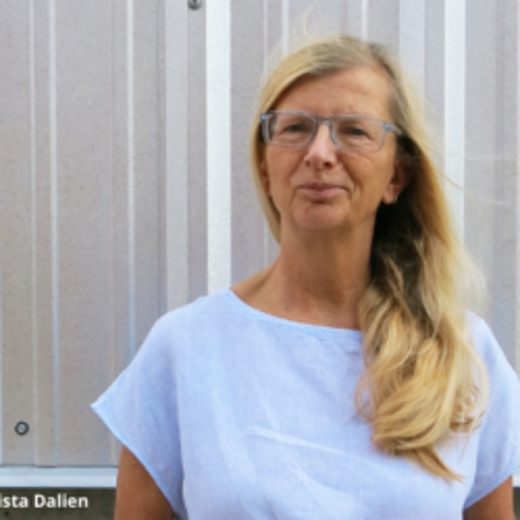
SFFMI: You like adventurous cooking. What’s the most unusual thing you’ve ever cooked?
Anna: I mean, I eat everything, except celery sticks. I don’t like celery sticks.
I cook with chicken hearts and gizzards. I’ve deep fried brain. I grew up in a place where every bit of a vegetable or an animal was used up. So, the liver of a cow was actually coveted. It’s full of iron. The chicken hearts were a cultural thing where whomever got to eat the heart, they were the lucky ones that week or that month, because there was only one heart to a chicken, right? So, I was lucky to grow up liking all of it.
I’ve been to places like in Thailand where I ate crickets. And I’ve not had snake yet, but it’s on my list.
SFFMI: Of all the places you’ve traveled, do you have a favorite cuisine?
Anna: Me, personally? Thai. I love Thai food. And there isn’t enough Thai food here in Santa Fe. If I had to pick, it’s Thai. But I mean, Chinese is an enormously diverse cuisine. I like lots of Chinese.
I love Indian food. Oh, my goodness. I’ve been to India many times. I cook Indian. It doesn’t require stellar ingredients. It just requires lots of spices.
SFFMI: Is Cuisine in its country of origin different compared to eating it in a restaurant here in the United States?
Anna: Well, yes and no. They adjust to the local palate. I lived in Salt Lake City and I knew the person who was running one of my favorite Thai restaurants, but I kept telling her, “Everything is a little too sweet.” And she said, “That’s what Americans want. So we make the food sweeter.”
So I think cuisine tends to adjust to the local palate because if you’re a small new restaurant, you want to be able to sell. So you’re going to slightly adjust, kind of look around and see what it is that might be needed. But there’s no replacement to actually going to the country and eating there. Even if [the chef] is from there, they will put a little extra spin on it because they have to be able to sell it.
SFFMI: How much does local agriculture shape a region’s food culture?
Anna: Oh, hugely. I mean, it’s based on what can be grown. That’s where it starts. Central India is not going to have lobster as their main course.
I think all cuisines are based on what is available. I was once in India and I was being hosted by a family who was like, “Wow, do you want to cook something Hungarian?” And I said, “Sure. We will need potatoes.” And there were no potatoes because this was in Northern India where it’s a desert and they don’t really grow potatoes there. So, of course, their local cuisine is going to be based totally on what’s grown.
Like what we have here in New Mexico—Mexican and New Mexican food is based on what grows here: corn, pumpkin type of squashes grow very well, etc. If you go to the farmer’s market here, the Hispanic vendors are going to sell the type of food that they will eat at home. Potatoes, onions, that kind of stuff. So it’s totally based on what’s growing.
SFFMI: Do you still cook dishes from your childhood in Hungary?
Anna: Oh, yeah. Sure. It’s basic stuff. It requires paprika, which I always travel with.
It’s what I grew up with. So, to me, Hungarian food is the basic comfort food. I don’t cook it often, though. I probably cook Hungarian maybe once every two months. But it’s quick stuff that requires potatoes, maybe chicken, paprika, onions. And then you just stew it for a long time. But it has to be done in a certain order.
But there is so much other stuff available that I find that I cook. I adapt. So, no, I don’t cook what I grew up with often enough.
SFFMI: How did you first become involved with the Santa Fe Farmers’ Market Institute?
Anna: Wherever I go, I always go to the farmer’s market. I go to the local grocery store. I check out what’s growing. I literally drive into the fields and I’m like, “Ooh, they grow this, they grow that”. So I wanted to volunteer because I had the time and I came to the farmer’s market and I was like, “Okay, there’s an opportunity to volunteer, how exciting.”
I put in my name into that little box to volunteer and nobody ever called me back. Then I went to an event that had nothing to do with the farmer’s market, and there was a small table manned by a volunteer. I said, “Oh my gosh, I would love to volunteer but nobody ever calls me back.” She said, “Give me your name and I’ll make sure that you get called back.”
I got called back three days later and I started to volunteer. And I literally said, “Just tell me what you want. Do you want me to sweep the floors? I’ll do that. Do you want me to do cooking demonstrations? I’ll do that.”
So I started to volunteer at the farmer’s market on Saturdays and Tuesdays and I just did whatever. I sat at the information booth. I did cooking demonstrations. I helped with programs for children.
And then COVID happened and nobody wanted to work, so I was asked if I could maybe do the information booth. I started to work there, and I just kind of grew into what I’m doing now. But it’s my jam. I love it.
SFFMI: What do you enjoy most about coordinating events at the Pavilion?
Anna: Oh, the people aspect. I like the fact that I see a request and six or eight months later there’s actually an event staged at the pavilion. So I like the process of starting from the first seed to going all the way to the full blown.
I’m a people’s person, so once I have people in the room I’m able to somehow woo them and make them want to book the pavilion.
SFFMI: What do clients appreciate most about working with you?
Anna: I think what I hear back is that we’re super responsive. I invite and allow a very comfortable space to work together, and they can ask the same question five times and I still am friendly.
I hear often that, “My gosh, you’re the first person who actually got back to me. I sent out four emails and nobody got back to me. You were the first one.”
One of the things that we were taught is you respond to every request. Even if your response is, “I have no idea but I’m going to look into it,” you respond because people like to be heard. People like to know that they didn’t just throw seeds and nobody’s paying attention.
SFFMI: What does a perfect day at the Pavilion look like?
Anna: I love mayhem. I love that everybody shows up and everybody’s like, “Oh my gosh, how are we going to pull this off?” And I’m like, “Well we have a plan. You have a run of show. You have hired all the right people. It’s going to fall into place.” And it does.
I thrive on busy. If it’s slow I start to get bored and go home.
SFFMI: Anything else you’d like to share about your work at the Institute?
Anna: I feel tremendous gratitude. I love what I do. I love our team. I don’t mind a 12-hour day. I don’t mind at all. I love that kind of stuff and I love my job.
I think we all should be in a place where our strengths are used. I think it’s beautiful. That’s one of the beautiful things about the team that we have here. Everybody has superpowers and I feel that everybody’s in the right spot.
Another thing that I like about my job is that it is always different. Each event is different, each client is different, and you have to be innovative and flexible and adaptable and use imagination and just be very present and very active, and I really like that.